9 Ways to Win Christmas Sales Without Becoming The eCommerce Grinch

Manago AI is the new name for SALESmanago. Read our rebrand story here


There is something special in the air during December. It is a mix of festive anticipation and the low-level hum of anxiety. You wish for Christmas to arrive already and, at the same time, you know how much you need to do before the bliss of blanket laziness. But first - presents! The stakes are high: you are not buying objects, you express love. And you don’t have much time!
Your customers feel exactly the same way.
Christmas purchases are rarely based on need or logic. They are fuelled by emotions. And yet, many eCommerce brands respond to this emotional pressure in a very standard way, often adding more noise and anxiety to the pot. They tend to bombard overwhelmed shoppers with countdown timers, flashing banners, and inbox-flooding campaigns. They meet their anxiety with chaos.
But the truth about the holiday rush is that sales are rarely lost because of price. They are lost to decision paralysis. When a customer feels overwhelmed already, they don't want more options—they crave confidence. The brands that truly win the Christmas season are the ones that can limit the festive noise and replace panic with peace of mind.
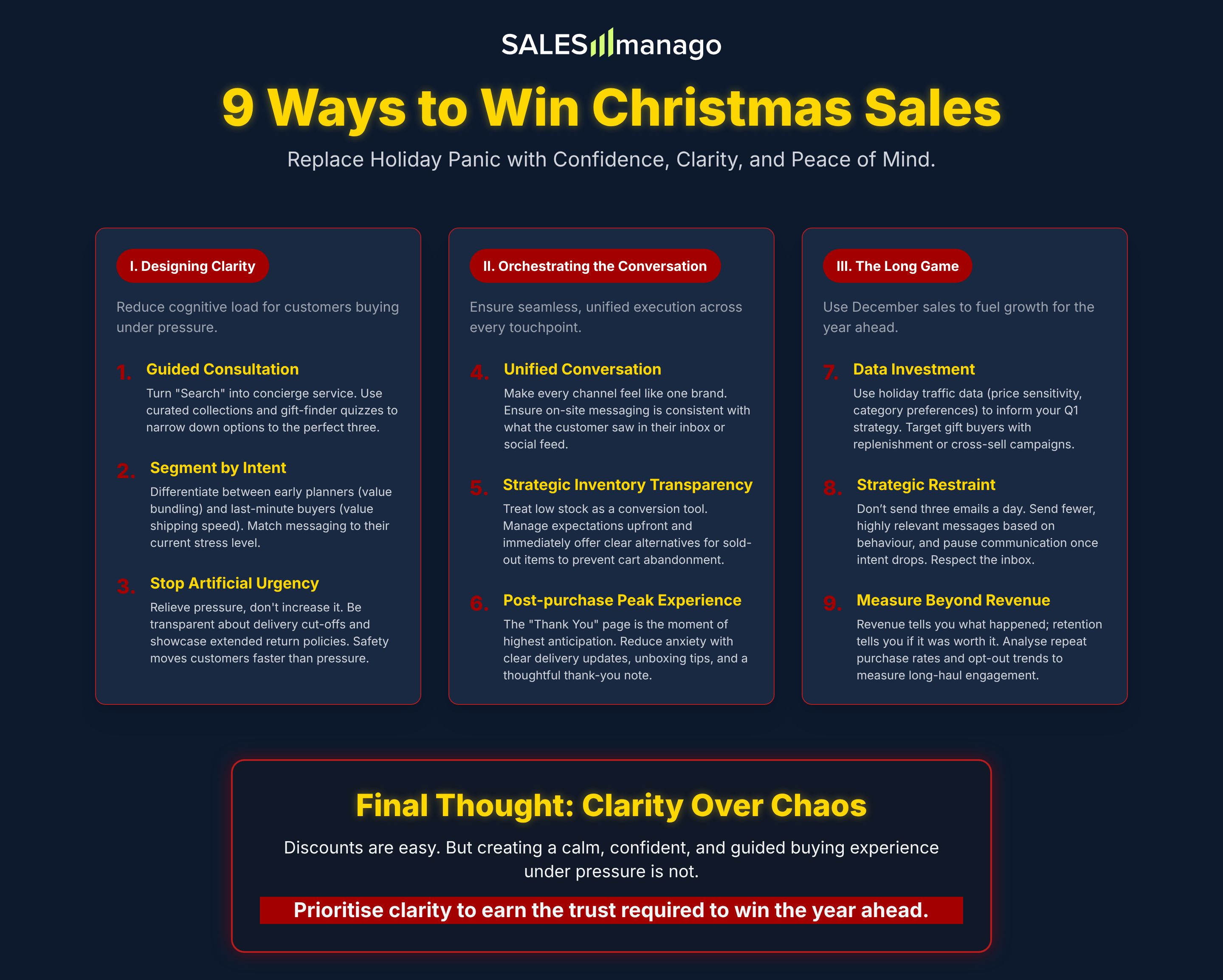
Here are 9 principles to help you shift your strategy from "chaos" to "curation" this Christmas.

The first step is realising that your customer is likely buying for someone else, on a deadline, with a high fear of making a mistake. Your job is to reduce that cognitive load.
Christmas shoppers rarely browse for the joy of it; they browse with anxiety. They are asking, "What does 'good' look like for my wife/partner/boss?" If they have to navigate complex filters, you will probably lose them.
Instead, treat your UX like a concierge. Create curated collections based on distinct personas (e.g., "The Tech Obsessive" or "The Last-Minute Hero"). Use simple gift-finder quizzes to narrow down thousands of SKUs to three perfect options. When you guide the discovery, you build the confidence that results in a 'Buy'"
>> Curious about the future of eCommerce? Discover the top trends for 2026 in our latest article.
Standard demographic segments break down during the holidays. A 40-year-old male might usually buy tech for himself, but today he’s buying perfume for his wife. Move toward behavioural segmentation. Distinguish between the shopper who plans early and values exclusivity and bundling, and customers who buy at the last minute and probably will be attracted by shipping speed and gift wrapping. When your messaging matches their current stress level and intent, they most likely convert.
During the holidays, the fear of missing a discount is secondary to the fear of disappointment—the gift arriving late or being wrong. So eCommerce brands have to stop turning up the pressure by running countdown timers and focus on relieving it. Be transparent about delivery cut-offs. Showcase your extended return policies. When a customer feels safe, they move faster than when they feel pressured.
Once you set the strategy that has customers' fears and needs in the centre, execution of it must be seamless. In a fragmented digital world, your brand needs to speak with one voice.
Your customer doesn’t see "your email strategy" and "your ad strategy." They just see your brand. If they click an ad for a specific gift set, but the landing page shows generic bestsellers, you lose their trust. So, ensure that your on-site messaging is based on what the customer saw in their inbox or social feed. Consistency is the fastest way to build trust.
The fastest way to generate frustration during peak season is to let a customer fall in love with a product that is about to sell out or is already gone. This isn't just about disappointing a customer; it's about forcing them to restart their stressful buying journey, often resulting in cart abandonment and negative brand opinion.
Instead of hiding low stock until the checkout, treat your inventory levels as a conversion tool. By managing expectations upfront and offering clear, immediate alternatives for sold-out items, you minimise friction and keep the customer within your purchase funnel.
For many marketers, the "Thank You" page is the finish line. For the customer, it is the moment of highest emotional anticipation, especially during the Christmas season. Don’t leave them alone. A thoughtful post-purchase flow, including clear delivery updates, unboxing tips, or a genuine thank-you note, reduces anxiety. This is the moment where a one-time buyer begins the transition into a loyal customer and will remember that you helped them prepare for Christmas smoothly. And for that, they will pick you next year—they won’t risk other options if they don’t have to.
Finally, remember that December is just one month. The best brands use Christmas to fuel their growth for the next twelve.
Holiday traffic is expensive, but it is also incredibly informative. You are gathering data on price sensitivity, category preferences, and channel responsiveness at scale. Don’t let this data sit in a silo. Use it to inform your January strategy. If someone bought a specific brand of skincare as a gift, they are a prime candidate for a replenishment reminder or a cross-sell campaign in Q1.
During the Christmas season attention is something that is hard to attract and extremely easy to lose. So perhaps hold back and don’t send three emails a day hoping that one of them will convert. It likely won't. Be smarter, and practice restraint. Send fewer, highly relevant messages based on behaviour, and pause communication once intent drops. Respect your customer’s inbox and they will respect you.
Revenue tells you what happened; retention tells you if it was worth it. Once the decorations come down, look deeper than GMV. Analyse your repeat purchase rates and your opt-out trends. Did you make a quick buck at the cost of burning your email list? Or did you acquire customers who are engaged for the long haul?
Discounts are easy. Every brand can slash prices. But not every brand can create a calm, confident, and guided buying experience under pressure. The companies that prioritise clarity over chaos don’t just win Christmas time but they earn the trust required to win the year ahead.



A recommendation frame may look simple from the outside: six products shown to one customer at one particular moment. What appears in those six slots, however, is the result of several decisions made in sequence. Some belong to the recommendation model itself, while others are controlled by the strategy around it: which products are allowed into the frame, what happe...
Read more
'AI-powered' used to mean something. Now it comes as standard on fridges.At some point the phrase stopped describing technology and started describing marketing. It's everywhere. Didn’t Dyson just add it to electric toothbrushes? It's also on every marketing platform in your shortlist, which is the part that should bother you, because you&#...
Read more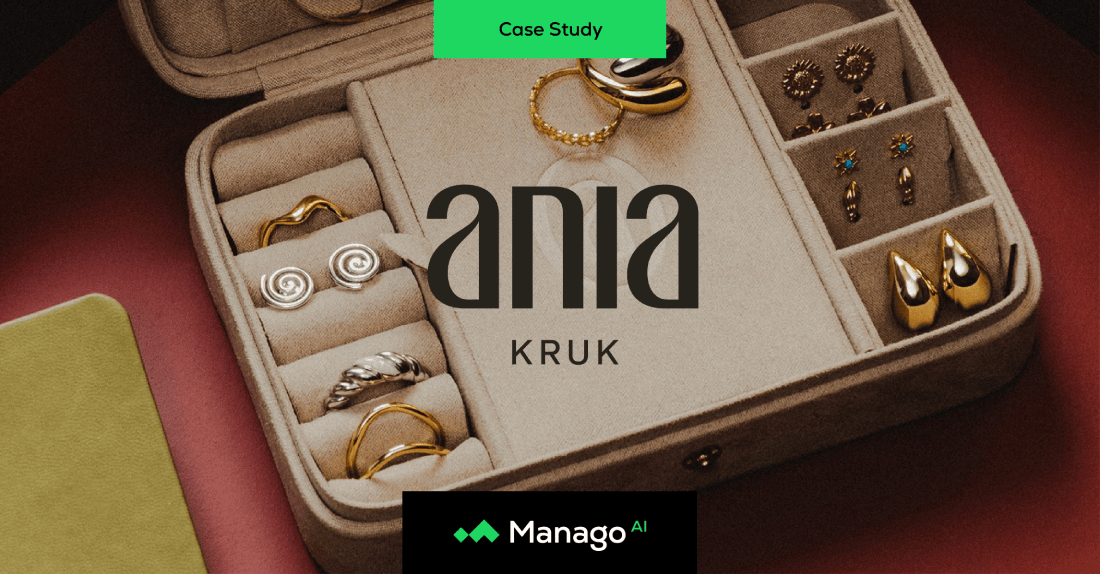
ANIA KRUK is a Polish jewellery brand founded in 2012 that continues the 180-year family jewellery tradition which speaks through their products, emphasising lightness, simplicity, and unforced elegance.
Read more